There were 25 Jennings novels written for children by Anthony Buckeridge between 1950 and 2004. It seems slightly odd to me that the author's political sympathies lay with the Left but he chose to write about the humourous antics of private schoolboy J.T.C. Jennings and his chum Darbishire. It also seems unusual for Armada to have staged photography for the covers of these 1970s reissues, rather than standard issue artist illustrated covers such as Richmal Crompton's contemporary Just William books did.
Photo covers were usually reserved for television or film tie-in editions, and unlike William Brown, Jennings never made the jump to TV. My warped view of the world can't help wondering about the erotic possibilities of the imagery for those of a certain persuasion. Operation Yewtree have been informed.
Also, why Tippex out the book prices if you've got nothing to hide?
Wednesday, 27 August 2014
Monday, 25 August 2014
Well All White
Thinking about the genius of Bruce Lacey over a cup of tea the other day, I recalled the strange automata featured in the Godley and Cream directed video for Herbie Hancock's Rockit. (No, that wasn't intended as a subtle dig at Herbie's wooden performance style, though I did see him play once and it was a decidedly underwhelming experience). The spastic humanoid figures are reminiscent of Lacey but their designer was British artist/inventor Jim Whiting, who appears to have had a brief period of popularity in the mid-80s in the UK before finding greater success abroad, not the first time the British have failed to appreciate their creative talent.
Here posh nob Hugh Laurie interviews Whiting for ITV's South of Watford arts programme in 1986 (replacing common man Ben Elton in the second series of SoW). Neither Elton nor Laurie are natural interviewers; their 'talents', such as they are, lay elsewhere.
Watch out for the pervy men and a brief sticky pubic hair situation, enough to make you wince.
Whiting is clearly somewhat deranged but rather likeable, and has apparently become a big name in 'Extreme Arts', which is apparently something to do with scaring drugged people festivals. Perhaps working in the margins is the safest place for artists.
Gluttons can see a live version of Rockit with some of Whiting's kinetic characters on Channel 4's The Tube here.
Friday, 18 July 2014
Peanuts!
Ever find yourself muttering "Jungle Fresh, Jungle Fresh" when you hear the word 'peanuts'? Maybe it's just me.
Anyway, Shelf Life is taking a commercial break for a few weeks over the summer and will return ready for action at the end of August. Stay hungry!
Wednesday, 16 July 2014
Re. Flux
Fluxus
Thomas Kellein
Thames & Hudson, London, 1995
![]() |
| Robert Filliou, General Semantics A-Z, 1967 |
![]() |
| Fluxus Collective Editions, 1961-5 |
![]() |
| Fluxkit, after1964 |
![]() |
| Performance of Philip Corner's Piano Activities, 1962 |
![]() |
| Joe Jones, Mechanical Fluxorchestra, c.1966 |
![]() |
| Robert Watts, Events, 1964 |
![]() |
| La Monte Young, The Tortoise: His Dreams and Journeys, 1964 |
Tuesday, 15 July 2014
Robert Stewart
Robert Stewart
Design 1946-95
Liz Arthur
Glasgow School of Art Press, 2003
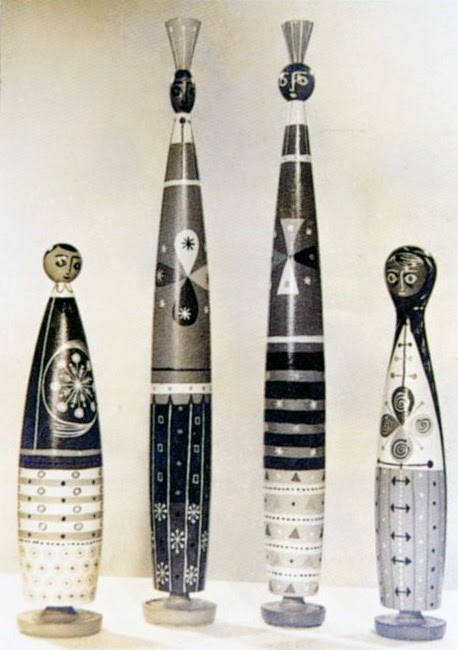
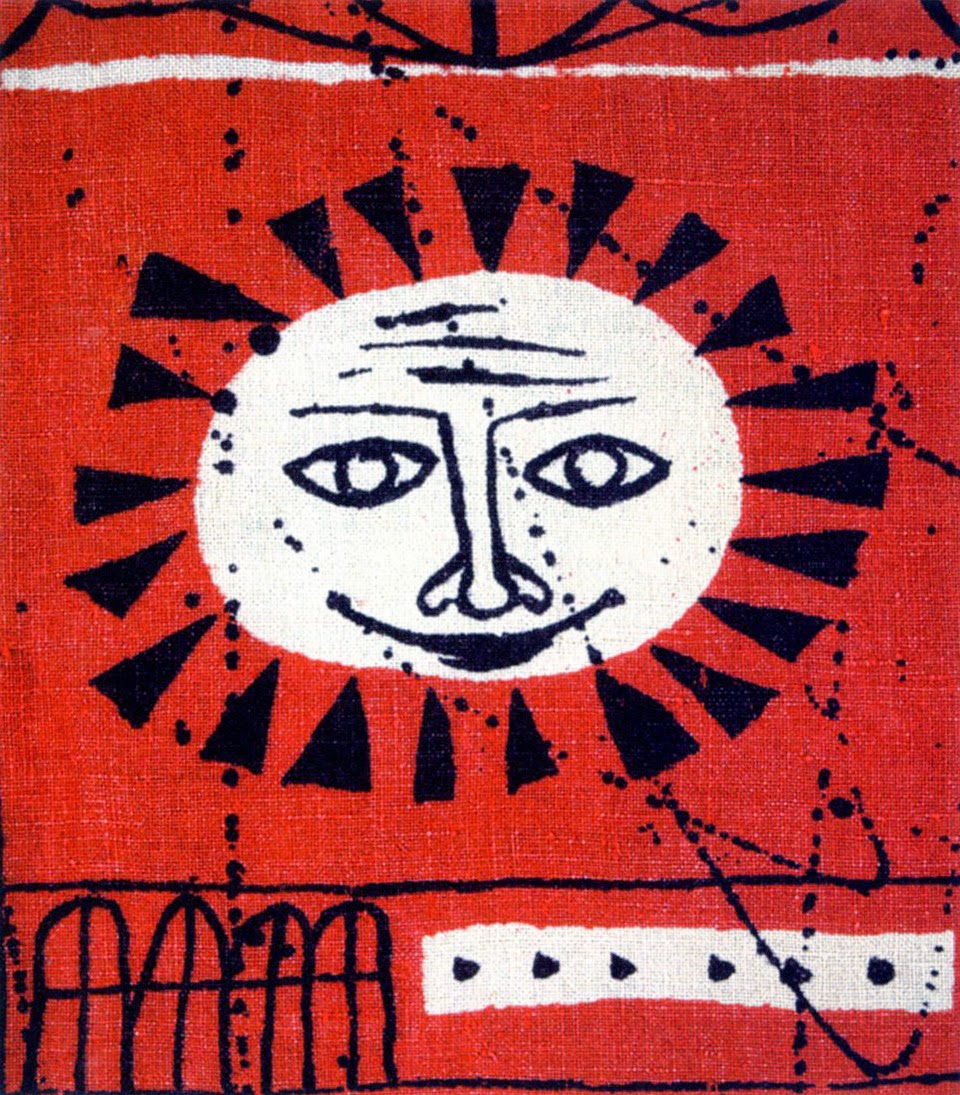
Robert Stewart was an artist who for many years taught at the Glasgow School of Art. Prolific and protean, he produced work in almost every medium and for many purposes, from commercial fabric design to public commissions to private collections.
I discovered his work whole researching school murals, and Stewart produced some fine examples. They are very much of the period but I like them for that, and imagine Jerry Cornelius cavorting on the rooftops above this example from Kensington.
Design 1946-95
Liz Arthur
Glasgow School of Art Press, 2003
Robert Stewart was an artist who for many years taught at the Glasgow School of Art. Prolific and protean, he produced work in almost every medium and for many purposes, from commercial fabric design to public commissions to private collections.
![]() |
| Turned wooden figures, 1953/4 |
![]() |
| Sun Man fabric design, 1953/4, Liberty of London |
![]() |
| Stewart and students, 1969. Note chin-stroker. |
![]() |
| Genesis tapestry, 1970, Strathclyde University |
![]() |
| Design for tankard, 1957-63 |
![]() |
| Ceramic mural, Royal Garden Hotel, Kensington, 1964 |
![]() |
| Mural installation at Eastwood High School, Renfrewshire, 1965 |
![]() |
| Mural for Adelphi Street School, Gorbals, Glasgow, 1965 |
![]() |
| Ceramic mural, Douglas Academy, Milngavie, 1966 |
![]() |
| Ceramic mural, Glendareuel and Kilmodan Primary School, 1975 |
![]() |
| Ceramic panel based on gravestones |
![]() |
| A-frame guest house and Stewart's studio, Loch Striven |
Thursday, 10 July 2014
Pay the Piper
John Piper
Penguin Modern Painters Series
John Betjeman
Penguin Books, Harmondsworth, Middx., 1944
Penguin Modern Painters Series
John Betjeman
Penguin Books, Harmondsworth, Middx., 1944
Wednesday, 9 July 2014
Games Design
Abram Games
Design
Naomi Games and Brian Webb
Woodbridge, Antique Collector's Club, 2013
There is more information about the design of the BBC's original Television Symbol here, including an animated version and clock version.
Labels:
Abram Games,
BBC,
Festival of Britain,
graphic design,
posters
Subscribe to:
Posts (Atom)