Showing posts with label photography. Show all posts

Wednesday, 22 April 2015

Nash Up

Paul Nash's Photographs
Andrew Causey 
Tate Gallery, London, 1973


Friday, 27 June 2014

Plans for Nigel


Nigel Henderson, Parallel of Art and Life
Victoria Walsh
Thames & Hudson, London, 2001 

Nigel Henderson was an interesting character that I'm keen to learn more about. Well known as part of the Independent Group with the Smithsons and Eduardo Paolozzi, he also worked with Richard Hamilton on several important exhibitions at the ICA.

Pictogram, 1949-51
As a solo artist he made use of his formative association with the Paris surrealists and pals like Roland Penrose, employing collage and photography to capture the anarchic energy of urban life and mass-produced visual culture around his East London home through children's street games and the often overlooked inspiration to be found in detritus and graffiti.

Collage, 1949

Chisenhale Road, 1951

Chisenhale Road, 1951

Chisenhale Road, 1951

Chisenhale Road, 1951

Chisenhale Road, 1951

Barber's Shop Window, c.1949-53

Distressed Door, c.1949-53

Alison Smithson on site of Hunstanton School, c.1953

Head of Man, 1956

Atlas, 1954

Floor Collage, 1956

From 'Lovely Linda' series, c.1977
In later years he moved to Thorpe-le-Soken in Essex and taught photography at Norwich School of Art. He remained equivocal about his talents and art in general. Perhaps that's the effect East Anglia has on people.

Thursday, 26 June 2014

Deakin

John Deakin
Photographs
Vendome Press, New York, 1998
Portrait of John Deakin by Luke Kelly, 1970
A few weeks ago I visited an exhibition of the work of John Deakin at the Photographers Gallery in London. Deakin is well known as Francis Bacon's Soho drinking associate, verbal punchbag, and creator of photographs that served as sketch material for some of Bacon's strongest paintings. I have admired his work for many years and this was the first occasion I have had to see a selection of work exhibited. Not a big show but enough to stimulate and satisfy.
Prunella Scales, 1954

His work reproduces well, as the images here attest, but seeing the original prints up close one truly perceives the marvelous skill with which they were created, every pore of his subjects' skin exposed for scrutiny.
Kenneth Tynan, 1952

Dylan Thomas, 1950
The portrait and fashion work is only part of the story as he was also an undervalued recorder of street life, following in the tradition of French photography, in particular Brassai, whose images of Paris graffiti - 'The Language of the Wall' - proved an inspiration for Deakin.

Rome, 1950s
Paris, 1950s

Paris, 1950s

Paris, 1950s
His incomplete or neglected photobook 'London Walls' would have been a great addition to his portfolio, but alas no publishers were interested and so the project atrophied with Deakin's terminal alcoholism.

Monday, 2 June 2014

Freund Indeed


Gisèle Freund, L'Oeil frontière : Paris 1933-1940
RMN, Paris, 2011

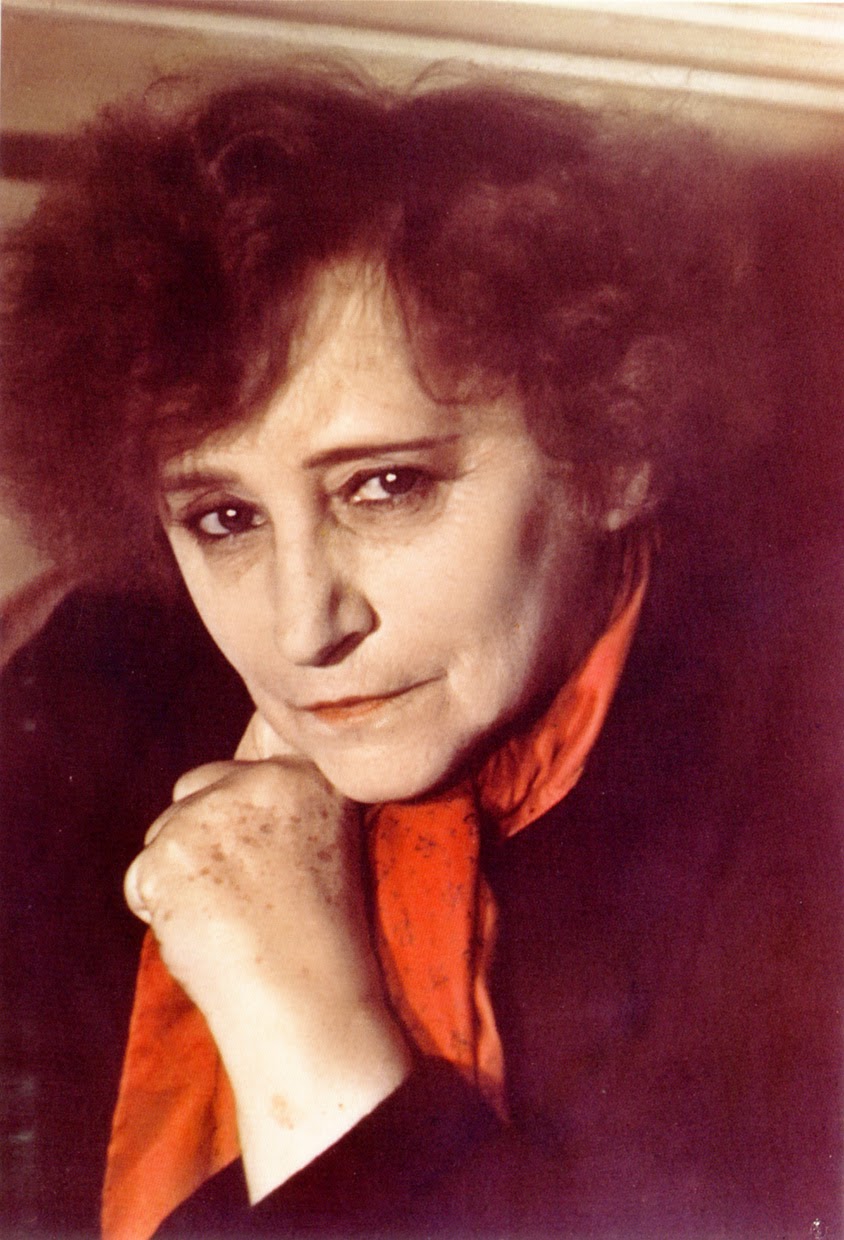
This exhibition catalogue from a show at the Fondation Pierre Bergé - Yves Saint Laurent contains mostly black and white images, which are very good and make the smaller colour selection from 1939 jump out. Freund had a brief flirtation with Kodakchrome. I wish it had been longer as the hues and saturation are great and give the subjects a jolt of contemporaneity, albeit with a slightly sickly pallor.

Myopic James Joyce

Brainiac Walter Benjamin

Smouldering Colette

Marcel Marceau Duchamp

Sideshow Jean Cocteau

Puffin' André Breton

Smokin' Jean-Paul Satre

Chintzy Virginia Woolf

Cheery Herbert Read and Anytime Peggy Guggenheim

Old Possum T.S.Eliot

Wild Man Thornton Wilder

Ars Longa Vita Sackville-West

Wednesday, 28 May 2014

Keartons on Kilda

With Nature and A Camera
Richard Kearton / Cherry Kearton (photographer)
Cassell, London, 1911

Being the Adventures and Observations of a Field Naturalist and an Animal Photographer

Richard and Cherry Kearton were team of brother naturalists; Richard provided the writing and scientific knowledge and Cherry took care of the photography and some of the text. Cherry was one of the first wildlife photographers, and in 1896 the pair undertook a mission to document the life on the remote Hebridean island of St Kilda, an almost barren mountain of rock thrusting up from the Atlantic where a small settlement scratched a living from fish and seabirds. Cherry's photographs provide a fascinating record of the lives of the island's human inhabitants, and some unintended laughs for those who share my childish sense of humour.

Spot the difference (clue the figure on the right may be a man)

Foul behaviour
No sniggering
With the growth of cinema the brothers parted company and Cherry moved into wildlife documentaries. 

The seabirds remain on St Kilda. The island no longer has human inhabitants, following the famous evacuation of 1930.